
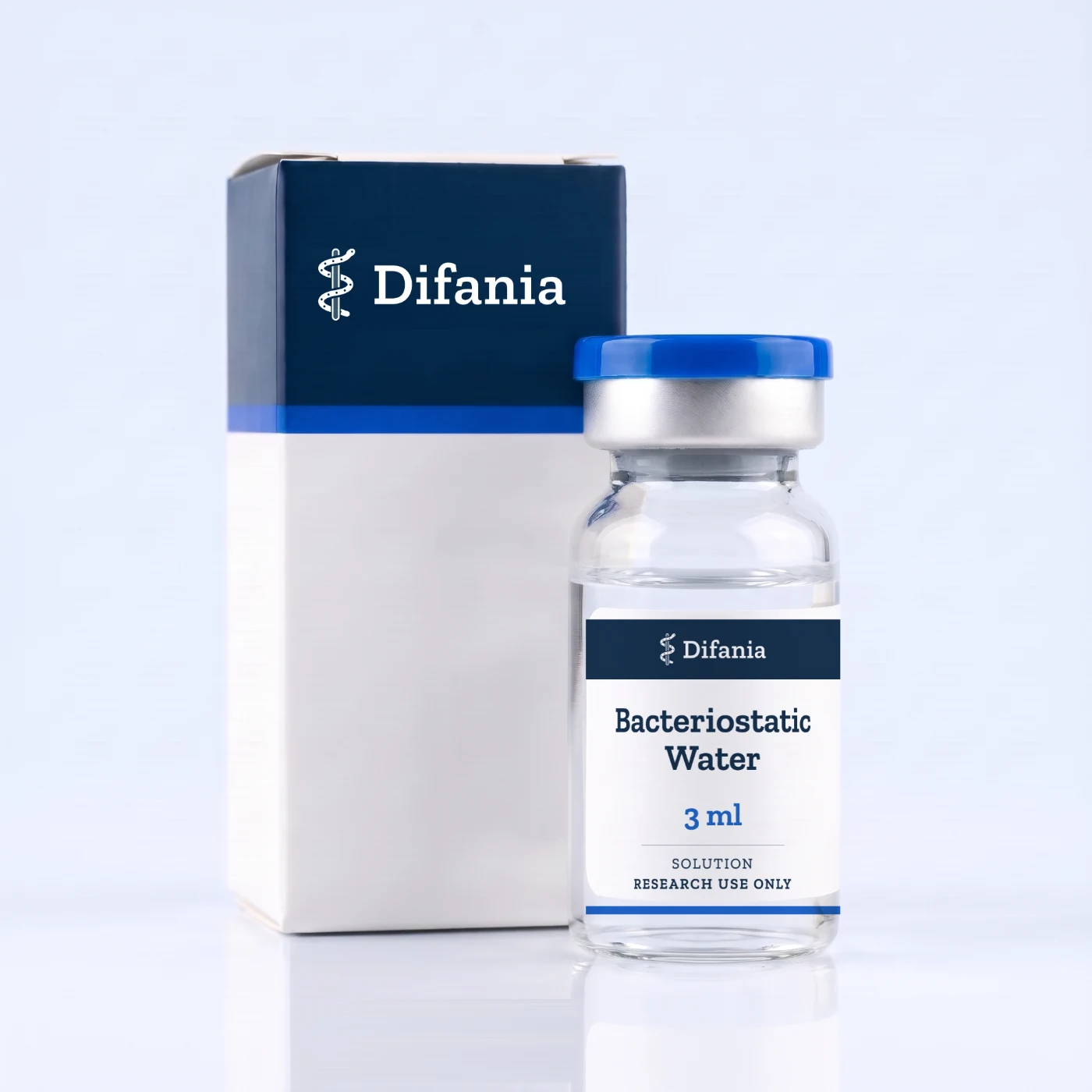
Bacteriostatic Water in the laboratory
What it is
Bacteriostatic water is a laboratory solvent supplied as a solution in sealed vials. Its name describes its formulation: it is water prepared so that it inhibits bacterial growth, which allows a vial to be punctured and sampled more than once without the contents being quickly spoiled. Difania lists it in the lab supplies range, alongside sterile water and a dilute acetic acid solution, and it is one of the solvents recommended for reconstituting the lyophilised peptides in the catalogue. The solvent is a supply for preparing solutions, not a reagent in its own right.
Specification
Bacteriostatic water is catalogued in two fill sizes, 3 ml and 10 ml vials. Both are presented as a solution, and each vial is identified by its lot number. The lot record is where the release details for a given vial are held, so check it when a particular vial matters for your work.
Using it in the laboratory
Bacteriostatic water is the sensible choice when one reconstituted stock is going to be sampled over a number of sessions. Each withdrawal is a fresh opening of the same stock, and the bacteriostatic formulation is designed for that pattern of use. Add it slowly down the wall of the peptide vial, keeping it clear of the solid, and let the peptide dissolve without shaking. Where a stock is needed for one session only, sterile water is generally the more suitable solvent. Difania supplies the solvent and its documentation, and it does not advise on experimental design.
Storage and shelf life
Keep unopened vials closed and stored in a clean, dry place, away from direct sunlight and from heat. Once a vial has been punctured, record the date on it and draw only with clean equipment, so that the remaining liquid is not contaminated. Take the lot record into account when deciding whether a vial remains suitable for the work in hand.
Safety and handling
Wear gloves and eye protection when handling the vial, and keep the work area clean so that nothing enters the liquid before it is used. Dispose of residues, emptied vials and contaminated items according to the rules of your institution and the local regulations that apply to you. Bacteriostatic water is a laboratory supply and not a medicinal product, a food, a supplement or a cosmetic. It must not be consumed, and it must not be administered to humans or animals.
Lot documentation
Each vial carries a lot number on its label. Quote that number when you contact Difania about a particular vial, and the lot record for it can be retrieved. Keep a note of the lot number, the date the vial was first punctured and the peptide it was used to prepare, so that the solvent batch can be identified if a question arises about a later preparation.

