
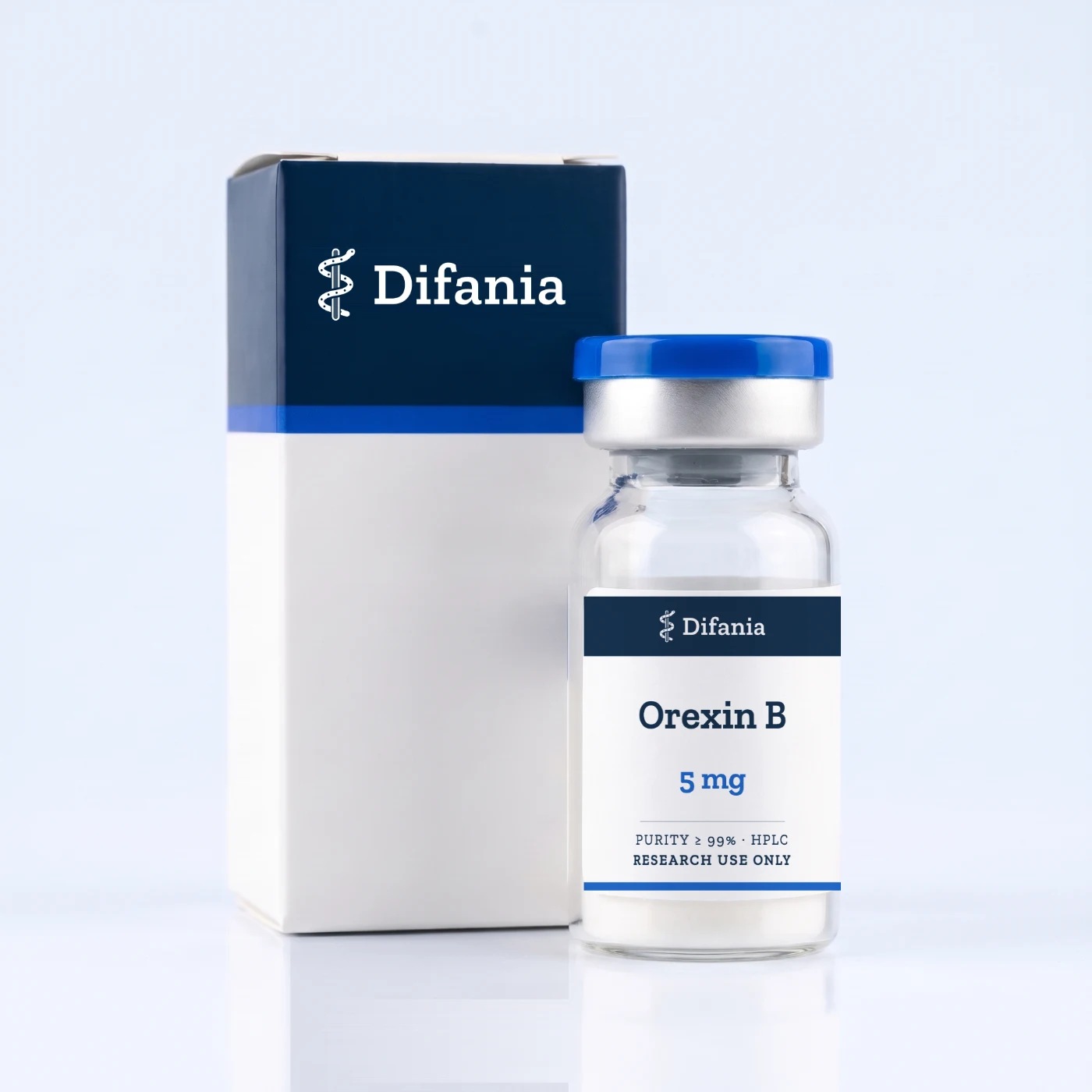
Orexin B in the laboratory
Identification
Orexin B is catalogued by Difania under neuropeptides and supplied as a lyophilised solid in two fill sizes, 5 mg and 10 mg of peptide per vial. Orexins are neuropeptides, a class of signalling peptides, and both fill sizes are specified at a purity of 99% or higher. Because the product is a peptide, its handling follows the general practice for lyophilised peptides, and the lot documentation should be read against the purity specification given in this entry.
Analytical control
Purity is established by reversed phase high performance liquid chromatography. The main peak is integrated against the full chromatogram, related substances and process residues are separated from it, and the result is read against the specification of 99% or higher. Identity is checked by mass spectrometry. Both results are recorded against the lot number, and the record is kept for each batch that is filled.
Reconstitution and solubility
Let the sealed vial reach room temperature before opening it. Add the solvent slowly down the inner wall of the vial rather than onto the solid, then swirl gently or allow the vial to rest until the material has gone into solution. Bacteriostatic water, sterile water or a dilute acetic acid solution are the usual solvents, and the choice depends on how many portions will be drawn from the stock.
| Vial size | Solvent added | Resulting concentration |
|---|---|---|
| 5 mg | 1 mL | 5 mg/mL |
| 5 mg | 2 mL | 2.5 mg/mL |
| 10 mg | 1 mL | 10 mg/mL |
| 10 mg | 2 mL | 5 mg/mL |
Keep in mind that a smaller volume produces a more concentrated stock, which is diluted for each working session.
Storage and stability
Store the sealed solid at minus 20 degrees Celsius, shielded from light, until the material is needed. Once solvent has been added, the solution belongs at 2 to 8 degrees Celsius and should be split into working portions while it is being prepared, so that the main stock is not opened every time a sample is taken. A frozen vial must warm before it is opened, which prevents moisture from condensing onto the powder.
Use in the laboratory
Orexin B is supplied for in vitro experiments and for use as a reference material. It is catalogued in the neuropeptide research field, and both vial sizes are offered to laboratories working in that field. Difania supplies the reagent together with the analytical documentation filed for its lot. It does not advise on experimental design or on the reading of any results.
Safety and handling
Gloves and eye protection apply whenever the vial is opened or solutions are transferred, and the dry powder should be handled within the containment your laboratory uses for fine solids. Residues, rinses and used labware are disposed of under the rules of your institution and the local regulations that bind it. Orexin B is a laboratory chemical and not a medicinal product, food, supplement or cosmetic. It is not for consumption and not for administration to humans or animals.
Lot documentation
Each vial carries a lot number on its label. Quoting that number is how the analytical file for the lot is retrieved from Difania, so keep it with the vial. Write it in your records alongside the date the vial was opened and the solvent volume used.


