
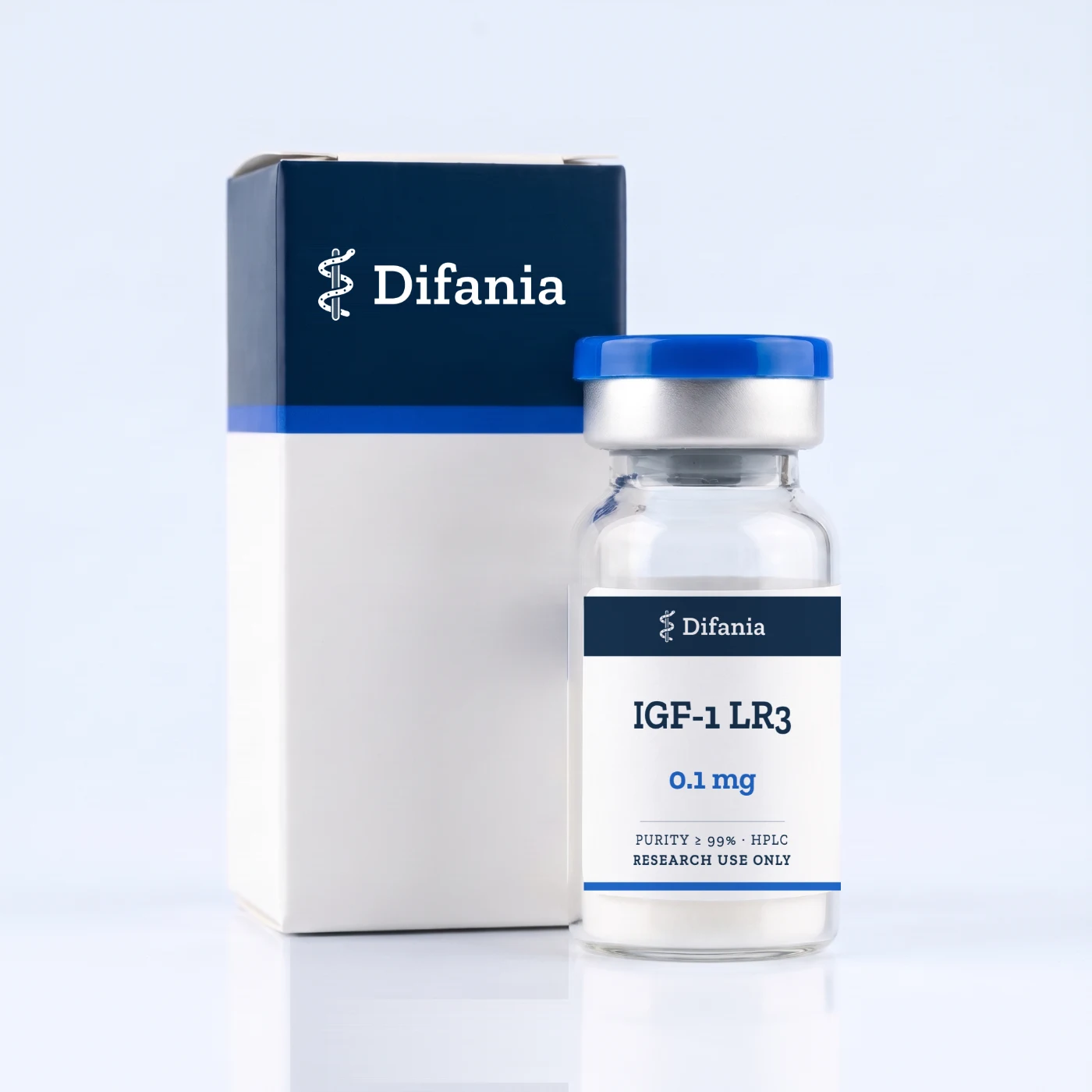
IGF-1 LR3 in the laboratory
Identification
IGF-1 LR3 is catalogued in the GH axis group and supplied as a lyophilised solid. One identifier is recorded against the entry, the CAS registry number 946870-92-4, and it is the figure to quote in any correspondence about the material. The catalogue holds no molecular formula, no molar mass and no amino acid sequence for this record, so none of those values appears here; where a method needs them, they have to come from your own characterisation. The practical consequence is worth stating plainly: without a recorded mass, a molar concentration cannot be derived from catalogue data, so a stock prepared from these vials is described and documented in mass concentration. Two fills are offered, 0.1 mg and 1 mg, which are a factor of ten apart, and both are released against the same purity specification of at least 99 percent. At 0.1 mg, that is 100 micrograms in the vial, small enough that the whole contents are normally dissolved in one step and handled by volume thereafter, since subdividing a fill of that size by weighing is not realistic on an ordinary balance.
Analytical control
Identity and purity are each demonstrated by their own method. Purity is measured by reversed phase HPLC, where a gradient separates the main component from related substances, every peak is integrated, and the figure obtained is set against the catalogue specification of at least 99 percent. Identity is confirmed by mass spectrometry. Since the catalogue records no mass for this entry, the documentation reports what was measured for the lot rather than a comparison with a listed value. Both results are retained in the file held for the lot.
Reconstitution and solubility
Let the vial warm to room temperature on the bench first. Direct the solvent slowly against the inner wall of the glass rather than into the middle of the vial, then tilt and rotate it until everything has dissolved. Swirl gently and do not shake, because foaming strands material in the neck and on the stopper, which matters a great deal when the whole fill is a fraction of a milligram. Bacteriostatic water, sterile water and a dilute acetic acid solution are the solvents in normal use.
| Vial | Solvent added | Resulting concentration |
|---|---|---|
| 0.1 mg | 1 mL | 0.1 mg/mL |
| 0.1 mg | 0.5 mL | 0.2 mg/mL |
| 1 mg | 1 mL | 1 mg/mL |
| 1 mg | 2 mL | 0.5 mg/mL |
| 1 mg | 10 mL | 0.1 mg/mL |
Check the solution against a pale background before drawing from it. It should be clear, with nothing visible in suspension.
Storage and stability
The sealed solid is kept at minus 20 degrees Celsius with light excluded, and left there until the day it is wanted. Solution is held at 2 to 8 degrees Celsius and, on the 1 mg vial especially, splitting it into working portions straight after it is made repays the effort, because every trip the shared vial makes to the bench warms the whole stock. A vial taken from the freezer reaches room temperature before the seal is broken, which keeps room air from depositing moisture on a cold cake.
Use in the laboratory
The material is supplied for in vitro experiments and for use as a reference substance, including as a characterised standard while an analytical method is being established. The name places it in insulin like growth factor research, and the catalogue groups it with the growth hormone axis entries on that basis. Difania supplies the material and the analytical documentation belonging to its lot; the design of experiments, and the interpretation of what they produce, rest with the laboratory.
Safety and handling
Treat the vial and its contents as a laboratory chemical. Gloves and eye protection go on before the seal is broken and stay on while solution is handled. Residual solution, rinsings and used labware are disposed of under the rules of your institution and local waste regulations. The material is not a medicinal product, not a food, not a supplement, not a cosmetic, and it is intended neither for consumption nor for administration to humans or to animals.
Lot documentation
A lot number appears on every vial, and quoting it allows Difania to retrieve the analytical documentation held for that filling. Keep it in your own records next to the date the vial was opened. With a small fill in particular, that pairing is often the only thing that later distinguishes one vial from another.


